Autophagy Modulators
Autophagy, a fundamental catabolic process, involves the degradation and recycling of cellular components through lysosomes, crucial for maintaining cellular homeostasis, responding to stress, and recycling nutrients. This intricate pathway is initiated by the ULK1 complex, followed by the nucleation of the autophagosome through the Beclin-1/VPS34 complex, LC3 lipidation, and subsequent autophagosome formation and fusion with lysosomes. Modulators of Autophagy can either induce (activators) or inhibit (blockers) this process, making them attractive therapeutic targets. Dysregulated autophagy is implicated in a wide spectrum of diseases. In cancer, autophagy exhibits a dual role; it can act as a tumor suppressor in early stages but often promotes tumor survival and resistance to therapy in established cancers.
In neurodegenerative diseases like Alzheimer's, Parkinson's, and Huntington's, impaired autophagy leads to the accumulation of misfolded proteins and cellular debris. It also plays roles in infectious diseases, metabolic disorders such as diabetes and obesity, inflammatory conditions like Crohn's disease, and the aging process itself, where autophagy declines. Research into autophagy modulators has seen significant progress. Chloroquine (CQ) and hydroxychloroquine (HCQ), approved antimalarials and autoimmune drugs, are widely repurposed as autophagy inhibitors in cancer clinical trials (Phase I-III). They primarily act by blocking autophagosome-lysosome fusion, aiming to enhance the efficacy of conventional chemotherapy and radiotherapy.
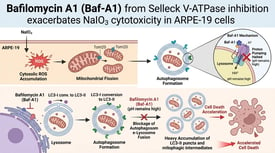
Beyond these lysosomotropic agents, other inhibitors target specific steps: VPS34 inhibitors like SAR405 and SBI-0206965, and ULK1/2 inhibitors such as MRT68921 and SBI-0206965, are in preclinical development. Autophagy activators, including rapamycin (an mTOR inhibitor that indirectly activates autophagy), trehalose, and carbamazepine, are being explored in preclinical and early clinical stages for neurodegenerative diseases. Inhibitors are broadly classified by their target (e.g., lysosomotropic agents, VPS34 inhibitors, ULK1/2 inhibitors, ATG protein inhibitors) or by their mechanism (e.g., fusion inhibitors, initiation inhibitors, elongation inhibitors). Key research tools include Bafilomycin A1 (a lysosomal acidification inhibitor), 3-MA (a PI3K inhibitor that inhibits early autophagy), and Torin 1/2 (mTOR inhibitors that activate autophagy). Challenges in developing autophagy modulators include achieving high specificity, addressing the context-dependent dual role of autophagy in cancer, managing potential off-target effects of broad-spectrum agents like CQ/HCQ, and accurately monitoring autophagy flux in vivo.
Combination therapy is a major strategy, particularly in oncology, where autophagy inhibitors are frequently combined with conventional chemotherapies, targeted therapies, or immunotherapies to overcome resistance. Similarly, autophagy activators are being investigated in combination with proteasome inhibitors for neurodegenerative conditions, highlighting the versatile therapeutic potential of modulating this essential cellular process.