TGF-beta/Smad Inhibitors
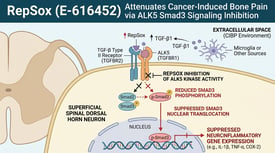
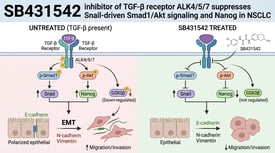
The Transforming Growth Factor-beta (TGF-beta) signaling pathway is a pleiotropic regulator of numerous cellular processes, including cell growth, differentiation, apoptosis, and the epithelial-mesenchymal transition (EMT). In the context of cancer, TGF-beta exhibits a complex 'dual role,' acting as a tumor suppressor in early-stage disease by inducing cell cycle arrest, but transitioning into a potent tumor promoter in advanced stages by facilitating metastasis and immune evasion. The canonical signaling pathway begins with the binding of TGF-beta ligands to the Type II receptor (TbetaRII), which then recruits and phosphorylates the Type I receptor (TbetaRI). This activation leads to the phosphorylation of receptor-regulated Smad proteins (Smad2 and Smad3), which form a complex with Smad4 and translocate to the nucleus to regulate gene expression. Non-canonical pathways, such as MAPK, PI3K/Akt, and Rho GTPases, are also activated by TGF-beta.
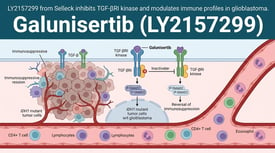
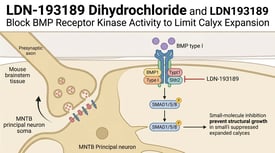
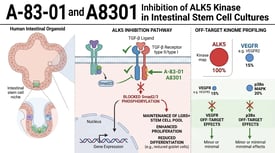
Inhibitors of this pathway are being developed to treat a variety of conditions, including advanced cancers and fibrotic diseases like idiopathic pulmonary fibrosis and renal fibrosis. These inhibitors are generally classified into three main categories: small-molecule kinase inhibitors (primarily targeting the TbetaRI kinase domain), monoclonal antibodies (targeting the ligands or the receptors), and antisense oligonucleotides. Galunisertib (LY2157299) is one of the most extensively studied small-molecule TbetaRI inhibitors and has been evaluated in clinical trials for hepatocellular carcinoma and pancreatic cancer. Vactosertib is another promising small molecule currently in clinical development. Monoclonal antibodies like Fresolimumab target all three isoforms of TGF-beta.
A significant challenge in targeting this pathway is the potential for off-target effects and systemic toxicity, particularly cardiotoxicity, which has been observed in preclinical models. Furthermore, the dual role of TGF-beta necessitates careful patient selection and timing of intervention. Current research is heavily focused on the role of TGF-beta in the tumor microenvironment, where it acts as a major mediator of immunosuppression by inhibiting T-cell function and promoting the recruitment of regulatory T cells and myeloid-derived suppressor cells. Consequently, combining TGF-beta inhibitors with immune checkpoint inhibitors (such as anti-PD-1/PD-L1) is a highly active area of clinical investigation, aiming to 'warm up' cold tumors and enhance the efficacy of immunotherapy. Bifunctional fusion proteins, such as Bintrafusp alfa (M7824), which simultaneously targets TGF-beta and PD-L1, represent an innovative approach to this combination strategy.
As we continue to unravel the complexities of TGF-beta signaling and its crosstalk with other pathways, the development of more selective inhibitors and the identification of robust biomarkers for patient stratification will be essential for realizing the therapeutic potential of this pathway in both oncology and regenerative medicine.