SKI-606 (Bosutinib) SKI606 Targeted BCR-ABL1 Kinase Inhibition and Adverse Pulmonary Profiles
Copy code to add this image to your page
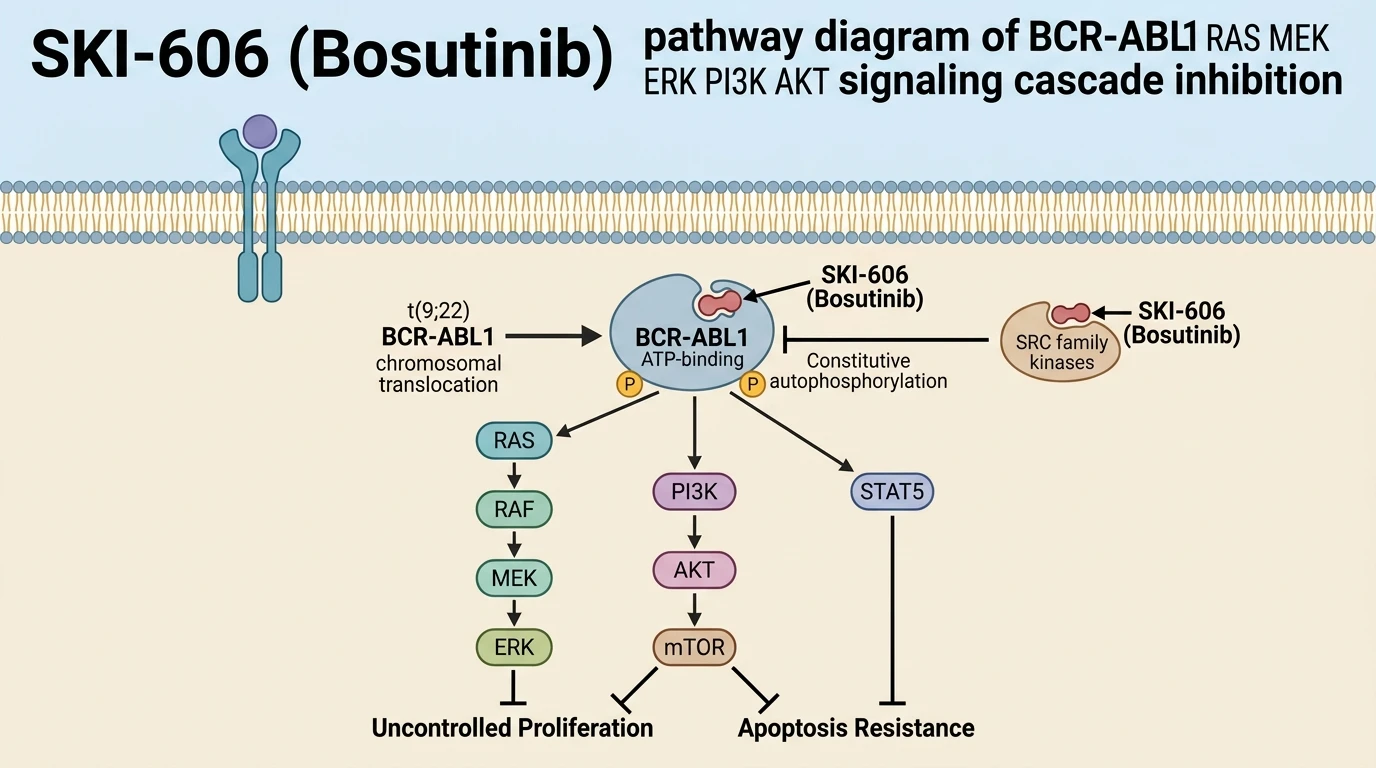
The therapeutic management of chronic myeloid leukemia (CML) was fundamentally reshaped by the development of small-molecule tyrosine kinase inhibitors that target the oncogenic BCR-ABL1 kinase. Among these agents, SKI-606 (Bosutinib) functions as a dual SRC and BCR-ABL1 kinase inhibitor. By occupying the ATP-binding cleft of BCR-ABL1 kinase, the compound prevents trans-autophosphorylation and inhibits downstream signal transduction through the RAS/MEK/ERK and PI3K/AKT cascades. In clinical trials, this mechanism of tyrosine kinase inhibition produced significant cytogenetic and molecular responses in patients resistant or intolerant to first-line therapies. However, systemic administration of kinase inhibitors frequently reveals off-target toxicities and secondary organ liabilities that require vigilant clinical monitoring.
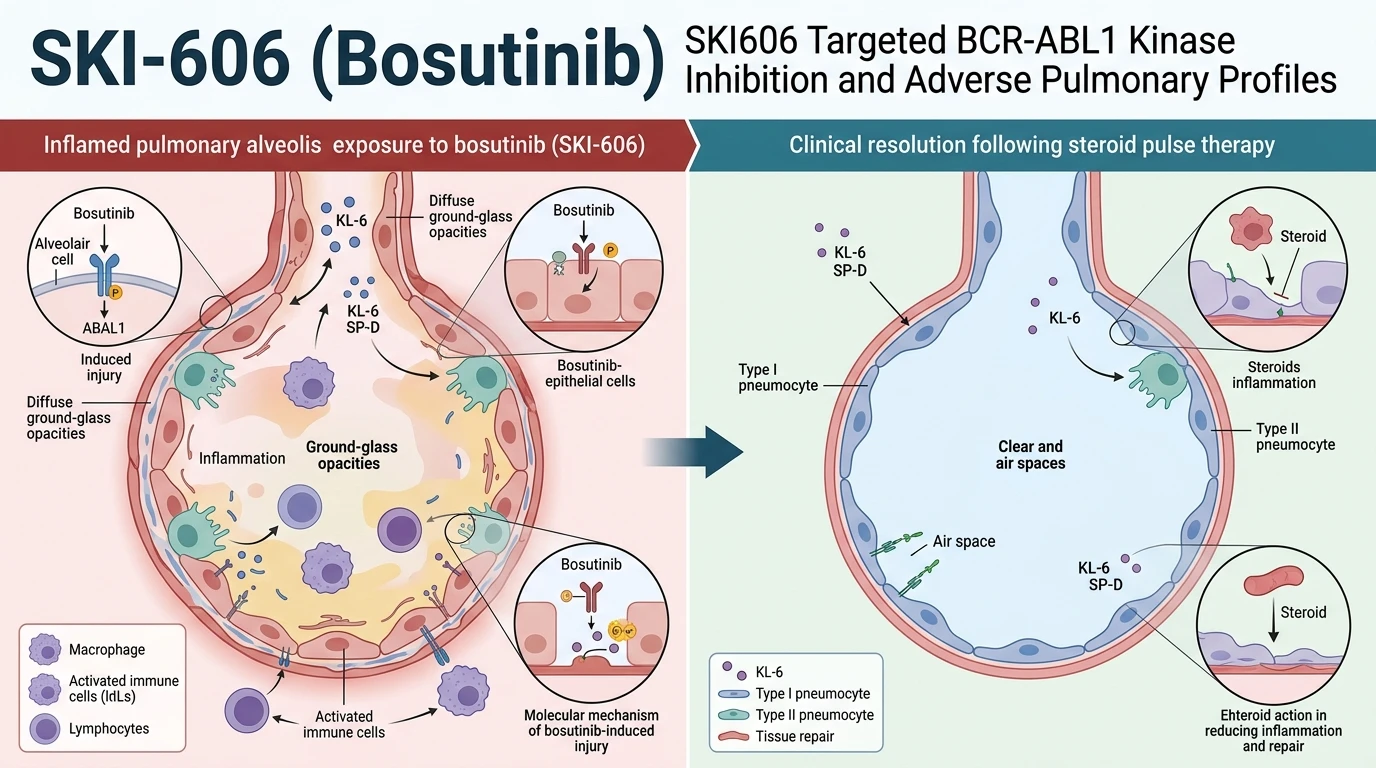
Recent clinical reports have highlighted life-threatening adverse pulmonary events associated with SKI606 administration. Specifically, two cases of severe bosutinib-induced interstitial lung disease (ILD) were documented in CML patients shortly after initiating treatment. Clinical manifestations emerged rapidly within two to three months of therapy onset. Patients presented with acute respiratory distress, severe hypoxemia, and progressive exertion dyspnea. Radiographic evaluations via high-resolution computed tomography (HRCT) demonstrated diffuse, bilateral ground-glass opacities accompanied by interlobular septal thickening, characteristic of acute interstitial pneumonitis. Serum biochemical analysis revealed markedly elevated levels of Krebs von den Lungen-6 (KL-6) and surfactant protein D (SP-D), which serve as established circulating biomarkers for alveolar epithelial cell injury and interstitial inflammation.
The pathophysiological mechanism underlying SKI-606 (Bosutinib)-induced pulmonary toxicity remains under active investigation. Dual Src/Abl inhibition may alter pulmonary vascular endothelial integrity or trigger alveolar epithelial immune sensitization in susceptible individuals. In both reported cases, prompt discontinuation of the offending agent was critical. Therapeutic intervention required high-dose corticosteroid pulse therapy combined with supplemental oxygen support. This regimen yielded complete clinical recovery and rapid radiological resolution of ground-glass infiltrates over subsequent weeks. Serum KL-6 and SP-D concentrations concurrently declined toward baseline values, confirming the mitigation of active alveolar damage.
Epidemiological observations indicate potential population-based variations in toxicity profiles. Literature review suggests that bosutinib-induced lung injury occurs earlier and presents with increased severity in Asian patient cohorts relative to Western populations. Factors such as genetic polymorphisms in drug-metabolizing enzymes, differential HLA allele distribution, or background environmental exposures may account for this observed geographical disparity. Given the rapid onset and life-threatening nature of this adverse event, routine monitoring of respiratory symptoms and baseline pulmonary evaluation are essential components of safe patient management during tyrosine kinase inhibitor therapy.
Clinical Manifestations and Management of Bosutinib Pulmonary Toxicity
Copy code to add this image to your page
SKI-606 (Bosutinib) acts as a potent dual inhibitor of BCR-ABL1 and SRC family tyrosine kinases. By competing with ATP for binding to the catalytic domain of BCR-ABL1, it prevents trans-autophosphorylation and blocks activation of key downstream pro-survival pathways, including RAS/RAF/MEK/ERK, PI3K/AKT/mTOR, and STAT5. This target engagement leads to cell cycle arrest and apoptosis in CML cells. Rare off-target activity or localized immune activation in alveolar tissue can trigger acute interstitial lung disease with biomarker surges.
Elevated Biomarkers KL-6 and SP-D Signal Alveolar Epithelial Damage
Acute onset of pulmonary symptoms occurred within eight to twelve weeks following initial exposure to SKI606. Biomarker analysis revealed marked elevations in serum KL-6 and SP-D concentrations. These proteins reflect structural damage to type II pneumocytes and disruption of the alveolar-capillary barrier. Respiratory function declined rapidly in both observed cases. High-resolution computed tomography demonstrated extensive bilateral ground-glass opacities throughout all lung zones. Diagnostic bronchoscopy excluded opportunistic fungal, viral, and bacterial pathogens. Consequently, the clinical evidence pointed directly to drug-induced pneumonitis caused by kinase inhibitor exposure.
Bilateral Ground-Glass Opacities Resolve Following Corticosteroid Pulse Therapy
Immediate cessation of SKI606 therapy represented the foundational intervention. Systemic administration of high-dose methylprednisolone pulse therapy was initiated alongside supplemental oxygen support. Clinical symptoms improved within forty-eight hours of steroid administration. Supplemental oxygen requirements decreased steadily during the first week. Follow-up radiological imaging at four weeks demonstrated near-complete resolution of bilateral pulmonary infiltrates. Concurrently, serum KL-6 levels exhibited a progressive downward trajectory toward standard physiological reference ranges. These findings confirm that prompt immunosuppressive therapy effectively reverses drug-induced inflammatory lung injury.
Population Heterogeneity Influences Onset and Severity of Pulmonary Lesions
Comparative analysis reveals distinct incidence patterns across ethnic populations. Asian patients treated with bosutinib demonstrate a higher tendency for early-onset interstitial lung disease compared to Western cohorts. Genetic variances in drug transport and hepatic metabolism may alter systemic exposure levels. Moreover, specific immune receptor reactivity might predispose certain patient subsets to localized pulmonary hypersensitivity reactions. Pharmacovigilance frameworks must account for these demographic risk factors. Clinicians should establish baseline pulmonary function parameters and enforce rigorous symptom monitoring during the first three months of treatment.