3TC, BCH189 Lamivudine (3TC, BCH-189) Regimens Mitigate Antiretroviral Bone Turnover Dynamics
Copy code to add this image to your page
Antiretroviral therapy initiation in treatment-naive individuals living with HIV-1 routinely triggers systemic metabolic alterations, including accelerated bone turnover and subsequent reductions in bone mineral density. Lamivudine (3TC, BCH-189) functions as an essential nucleoside reverse transcriptase inhibitor (NRTI) targeting the active site of HIV-1 reverse transcriptase. When combined with non-nucleoside reverse transcriptase inhibitors or integrase strand transfer inhibitors, distinct combination regimens yield disparate impacts on skeletal integrity and bone biomarker dynamics. In the Phase III SINGLE trial, which enrolled 833 antiretroviral-naive HIV-1-infected adults over a 144-week evaluation period, researchers investigated the longitudinal metabolic consequences of initiating dolutegravir (DTG) paired with fixed-dose abacavir and lamivudine (ABC/3TC) relative to the once-daily regimen of efavirenz, emtricitabine, and tenofovir disoproxil fumarate (EFV/FTC/TDF).
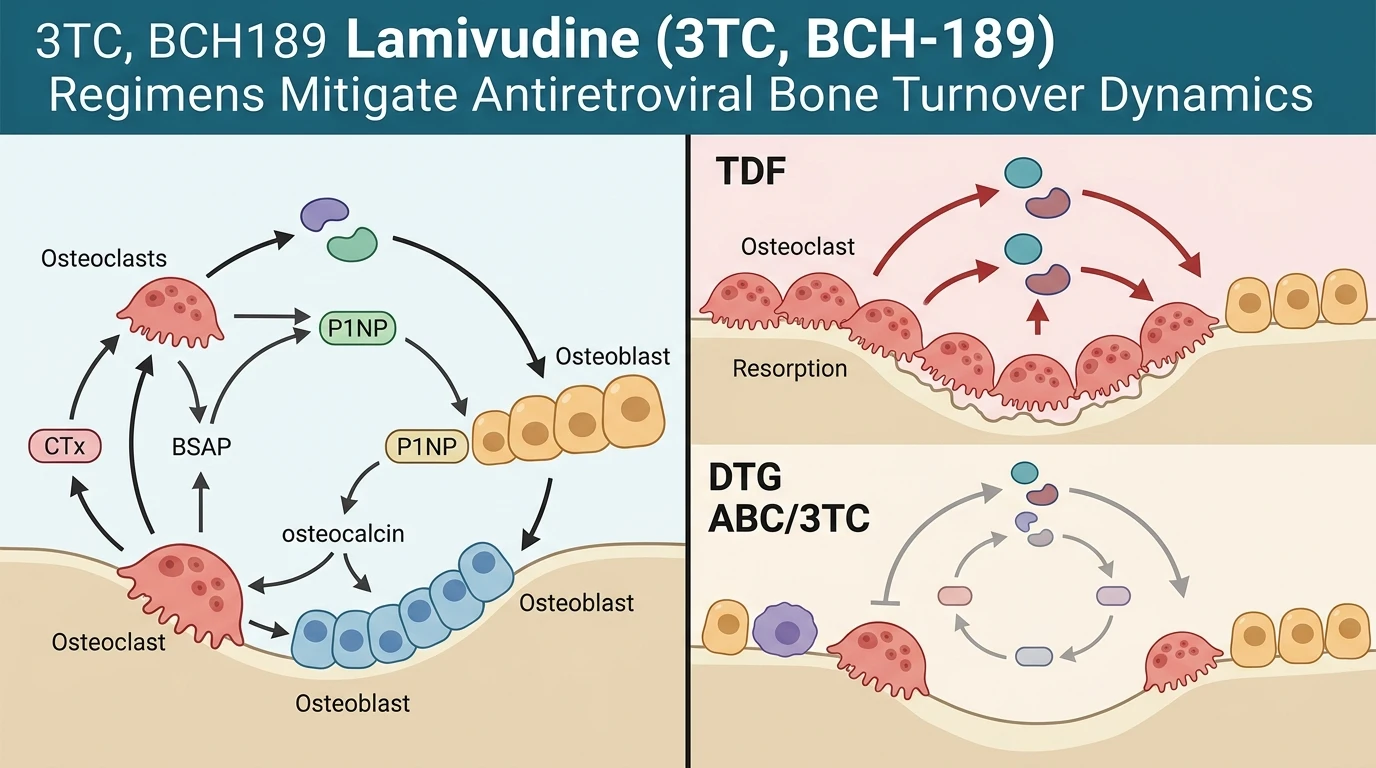
Systemic skeletal remodeling was evaluated by measuring longitudinal changes in key bone turnover markers (BTMs) across both treatment cohorts. Evaluated markers included bone resorption indicators such as C-telopeptide of type 1 collagen (CTx) alongside bone formation markers including osteocalcin, bone-specific alkaline phosphatase (BSAP), and procollagen type 1 N-terminal propeptide (P1NP). Following treatment initiation, serum concentrations of all four BTMs rose sharply in both study arms, reaching peak baseline-adjusted elevations between weeks 48 and 96. This transient elevation reflects systemic coupling of osteoclast and osteoblast activities during the initial phase of viral suppression. However, the magnitude of BTM acceleration differed substantially between the two therapeutic schedules.
Patients receiving the DTG plus ABC/3TC combination exhibited significantly attenuated elevations in CTx, osteocalcin, BSAP, and P1NP across all studied time points—including weeks 48, 96, and 144—compared to those treated with EFV/FTC/TDF. Tenofovir disoproxil fumarate is known to induce proximal renal tubular dysfunction and mild phosphate wasting, which triggers compensatory increases in parathyroid hormone secretion and osteoclast-mediated bone breakdown. The absence of TDF in the DTG + ABC/3TC arm avoided this specific nephro-skeletal axis stress, resulting in lower net systemic bone remodeling activity. Understanding these complex tissue-level dynamics benefits from broader analytical platforms, including research conducted using advanced cellular modeling systems to evaluate drug-induced tissue alterations.
Concurrent evaluations of vitamin D homeostasis revealed modest decreases in serum 25-hydroxyvitamin D concentrations across both treatment arms over the 144-week window. Crucially, no statistically significant inter-group differences were detected in vitamin D levels, indicating that the preferential skeletal preservation observed with DTG + ABC/3TC occurred independently of vitamin D metabolic alterations. These long-term clinical trial metrics establish that selecting a regimen combining DTG with ABC/3TC offers a distinct advantage in mitigating bone turnover, preserving bone structural integrity, and reducing systemic metabolic stress in adults initiating primary antiretroviral therapy.
Longitudinal Bone Biomarker Kinetics and Comparative Skeletal Profiles
Copy code to add this image to your page
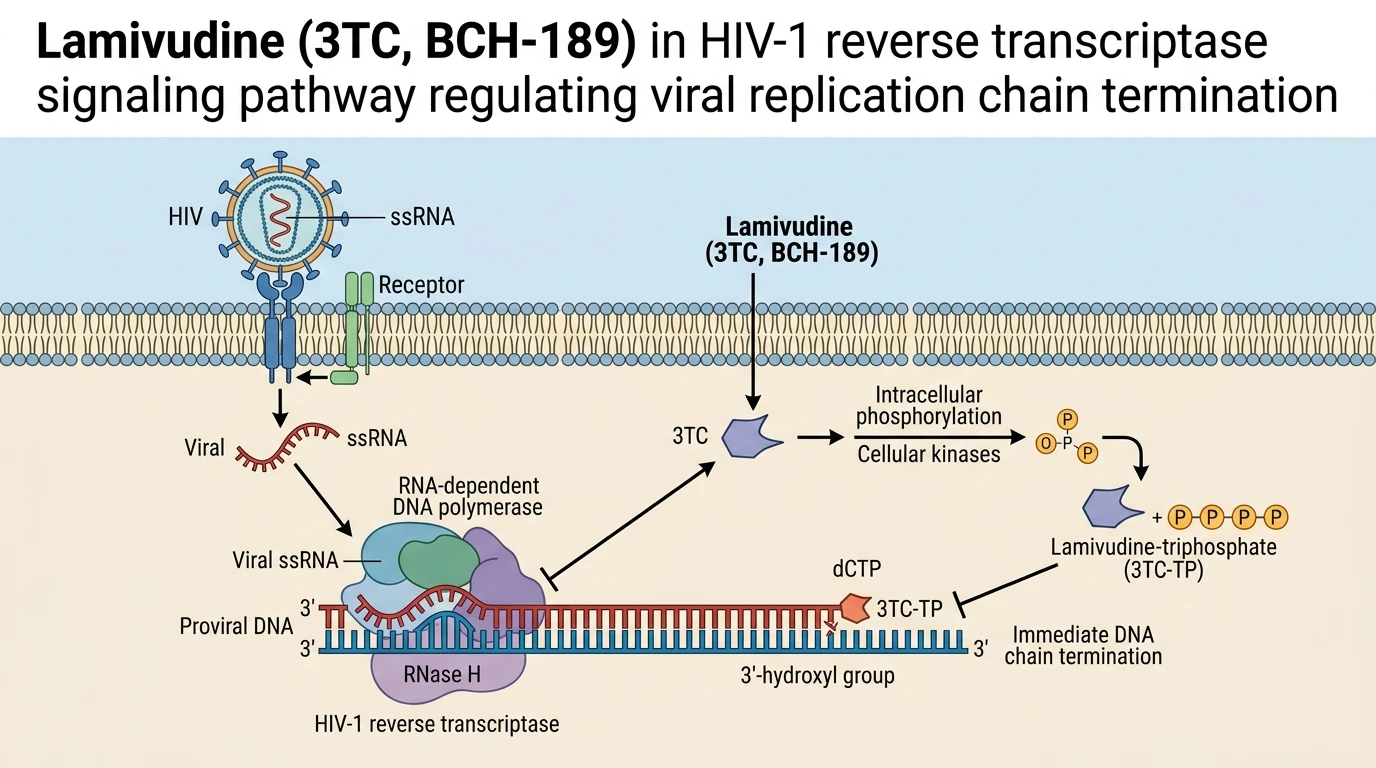
Lamivudine acts as a nucleoside reverse transcriptase inhibitor targeting HIV-1 reverse transcriptase. Intracellularly phosphorylated to its active triphosphate, it competes with endogenous deoxycytidine triphosphate for insertion into viral DNA, causing chain termination. In the Phase III SINGLE trial, initiating DTG + ABC/3TC led to significantly smaller increases in bone turnover markers (CTx, osteocalcin, BSAP, P1NP) over 144 weeks compared to EFV/FTC/TDF. Peak marker elevations occurred between weeks 48 and 96. Both arms showed modest, equivalent decreases in serum vitamin D, confirming a superior long-term bone health profile for DTG + ABC/3TC independent of vitamin D metabolism.
Attenuated Bone Turnover Dynamics in Lamivudine Regimens
Initiation of antiretroviral therapy consistently alters bone remodeling equilibrium. In the SINGLE trial cohort, patients receiving DTG paired with ABC/3TC exhibited significantly lower elevations in bone resorption and formation markers than those treated with EFV/FTC/TDF. Serum CTx and P1NP concentrations peaked between weeks 48 and 96 across both arms. However, the absolute percentage increase remained markedly suppressed in the dolutegravir group. The administration of fixed-dose 3TC, BCH189 alongside abacavir avoided the proximal renal tubular transport stress associated with tenofovir disoproxil fumarate. Consequently, compensatory parathyroid hormone signaling was minimized. Osteoclast activity was restrained under these clinical conditions.
Long-Term Vitamin D Stability and Skeletal Safety
Vitamin D metabolism remained largely uniform regardless of the chosen nucleoside backbone. Both study groups experienced minor reductions in total serum 25-hydroxyvitamin D over the 144-week monitoring period. No statistically significant divergence occurred between cohorts. This observation indicates that differential bone turnover marker responses were not driven by altered vitamin D bioavailability. Instead, the skeletal benefit stems from differing intrinsic toxicities of the primary antiretroviral backbones. Incorporating 3TC, BCH189 in first-line regimens yields a predictable skeletal profile without requiring specialized vitamin D supplementation protocols beyond standard health guidelines.